
A New Immigration Ruling Could Make It Harder for Undocumented Parents of U.S. Citizen Children to Avoid Deportation

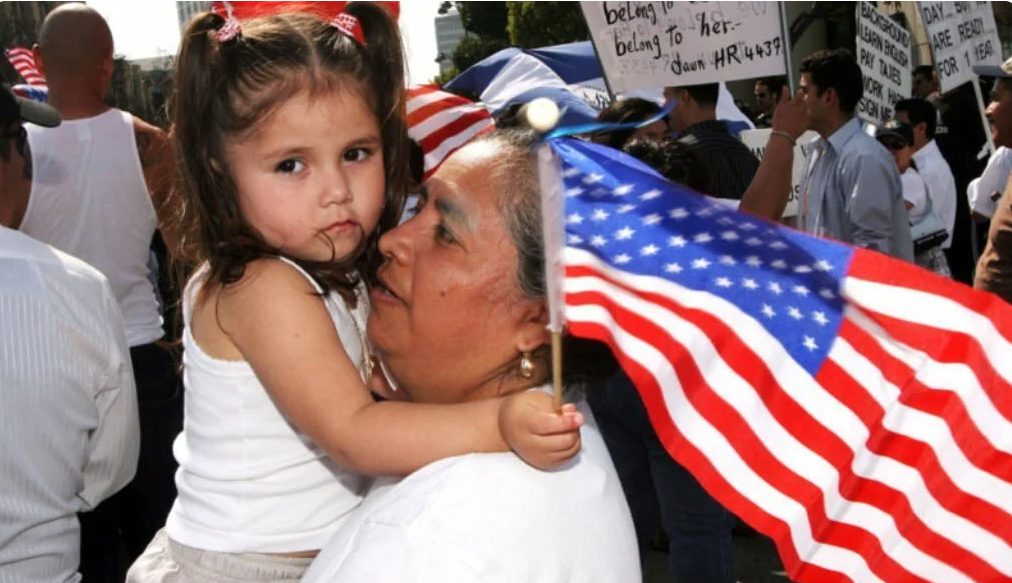
A new precedent from the Board of Immigration Appeals says leaving a U.S.-citizen child without a parent in the United States does not, by itself, establish the extraordinary hardship needed to stop a parent’s removal.
The big picture: A new immigration ruling could make it harder for some undocumented parents who have lived in the United States for years—and are raising American children—to avoid deportation based on the harm their removal would cause their families.
In Matter of Lopez-Davila, decided July 16, 2026, the Board of Immigration Appeals (BIA) ruled that a parent’s decision to leave a U.S.-citizen child in the United States without parental care does not, standing alone, establish the “exceptional and extremely unusual hardship” required for cancellation of removal.
The Board also held that care from a responsible adult other than a parent may be considered sufficient. In other words, the absence of a parent is not automatically enough to satisfy the hardship standard.
Primary source: Read the full DOJ/BIA decision — Matter of Lopez-Davila. The decision is published as 29 I&N Dec. 763 (BIA 2026), Interim Decision #4219.
Why it matters
Cancellation of removal is one of the most important—but difficult—forms of relief available to certain undocumented immigrants who have built long-term lives in the United States.
For certain nonpermanent residents in removal proceedings, the law generally requires at least 10 years of continuous physical presence, good moral character, compliance with specified criminal-history requirements, and proof that removal would cause “exceptional and extremely unusual hardship” to a U.S.-citizen or lawful-permanent-resident spouse, parent or child.
That last requirement is intentionally demanding.
The BIA has said the hardship must be substantially beyond what would ordinarily be expected when a close family member is removed from the United States.
Lopez-Davila makes clear that family separation itself may not be enough.
What happened
The facts of the case are striking.
Jeobany Alexander Lopez-Davila is a Guatemalan national and the father of a 6-year-old U.S.-citizen daughter.
According to the BIA decision, he was the family’s sole caregiver. The child’s mother had suffered a stroke that resulted in severe physical and cognitive disabilities and was unable to care for herself or others. The decision also says she had been diagnosed with suicidal ideation and had experienced multiple hospitalizations.
While Lopez-Davila was detained, his daughter’s adult half-sister cared for the child.
But the half-sister testified that she could not do so permanently.
The immigration judge concluded that the girl could ultimately end up in foster care if her father were deported—and initially granted Lopez-Davila cancellation of removal.
DHS appealed.
The BIA sided with DHS, vacated the immigration judge’s order granting relief and sent the case back to immigration court.
Importantly, that does not mean the BIA issued a final order saying Lopez-Davila must immediately be deported. The Board remanded the case so the immigration court can reassess hardship under the legal framework laid out in the new decision.
The government’s argument—and the BIA’s conclusion
The central question became:
What happens if a parent is deported but the U.S.-citizen child remains in America?
The BIA reaffirmed an older precedent, Matter of Ige, and applied its reasoning to cancellation-of-removal cases.
The basic principle is significant.
If the child could accompany the parent to the parent’s country without suffering the legally required level of hardship, the parent generally cannot create that hardship simply by choosing to leave the child behind in the United States.
The BIA characterized that situation as one resulting from parental choice rather than the deportation itself.
Another major issue: Who can care for the child?
The BIA also rejected the idea that only a parent can provide adequate care.
The immigration judge had focused heavily on the fact that Lopez-Davila was effectively the child’s only capable parent.
But the Board said immigration law does not require a minor child to be cared for specifically by a parent.
A responsible adult who is not the child’s parent may potentially provide sufficient care.
That distinction could matter significantly for mixed-status immigrant families.
What this could mean for immigrant families
The practical consequence is that cancellation-of-removal cases may need much more evidence than: “My U.S.-citizen children need me here.”
Parents may have to establish specifically what would happen under both realistic scenarios:
If the child stays in America: Who will care for the child? Is that person financially, physically and legally capable of doing so? What happens to the child’s housing, schooling, medical care and psychological well-being?
If the child leaves America with the parent: What conditions would the child encounter in the parent’s home country? Would necessary medical treatment or special education be available? What would happen economically? Are there safety concerns? What other individualized hardships would the child face?
The BIA emphasized that hardship is evaluated cumulatively rather than through a single factor.
The paperwork may matter more, too
There is another important part of the ruling that immigrant families and their attorneys should notice.
Lopez-Davila had not submitted an affidavit confirming that he actually intended to leave his daughter in the United States, nor had he provided proof of arrangements for her long-term care.
The BIA said an applicant who intends to leave a qualifying child in the United States is generally required to provide an affidavit and evidence showing the arrangements made for the child’s care.
Why that matters: Cancellation cases may increasingly turn not simply on emotional testimony about family separation, but on detailed documentation showing exactly what the family’s post-removal reality would look like.
Between two countries
For immigrant parents, the ruling exposes a painful legal dilemma.
A U.S.-citizen child has the right to remain in the United States.
But if the government removes the child’s undocumented parent, the family may effectively face two choices:
The child stays in the United States without the parent.
Or:
The American child leaves the United States to remain with the parent abroad.
Lopez-Davila makes clear that choosing the first option does not automatically transform the resulting separation into the extraordinary hardship required for cancellation of removal.
And if the child could reasonably accompany the parent abroad, the BIA may treat some of the hardship created by leaving the child behind as a consequence of the parent’s decision.
Zoom out: This is not an automatic deportation rule
There is an important distinction.
Matter of Lopez-Davila does not say that undocumented parents with U.S.-citizen children can never qualify for cancellation of removal.
Nor does it say that foster care, severe family disruption or loss of parental care can never contribute to a successful hardship case.
Instead, the Board held that lack of parental care alone isn’t automatically sufficient.
Other factors can still be considered cumulatively, including serious medical issues, special educational needs and other individualized circumstances affecting the qualifying relative. The Board specifically sent Lopez-Davila’s case back for additional fact-finding and a new hardship determination.
The bigger immigration-policy story
The decision arrives as the immigration court system itself is changing rapidly.
EOIR has been adding immigration judges at a historic pace. In May, the Justice Department announced 77 new immigration judges and five temporary judges—the largest class in EOIR history—and said 153 permanent immigration judges had been hired during the fiscal year at that point.
EOIR says the Office of the Chief Immigration Judge now oversees more than 600 immigration judges across 73 immigration courts and three adjudication centers.
That makes precedential BIA decisions such as Lopez-Davila especially important: they provide legal rules immigration judges use when deciding cases across the system.
The American Immigration Lawyers Association has already highlighted Lopez-Davila as a precedential decision involving cancellation of removal and hardship.
What immigrant families should know
The decision reinforces several important realities.
Having a U.S.-citizen child does not automatically prevent a parent’s deportation.
Living in the United States for 10 years does not automatically provide legal status either.
And even when an immigrant satisfies the other statutory requirements for cancellation of removal, the hardship requirement remains a major legal hurdle.
For families already in removal proceedings, Lopez-Davila makes the quality and specificity of the hardship evidence even more important.
Medical records, psychological evaluations, educational records, financial evidence, caregiver arrangements and documentation about conditions in the country to which a parent could be removed may all become important depending on the individual case.
The bottom line
Matter of Lopez-Davila draws a harder line around one of immigration law’s most emotionally difficult questions: What happens to an American child when the government deports the child’s parent?
The BIA’s answer is that losing day-to-day parental care—even when the child could potentially end up with another caregiver—does not automatically constitute the extraordinary hardship Congress requires for cancellation of removal.
For immigrant families, that means the legal question is becoming increasingly specific.
It isn’t simply:
“Will deportation hurt this family?”
In most cases, it obviously will.
The legal question is much harder:
“Can the family prove that the hardship to the U.S.-citizen or permanent-resident relative will be exceptional and extremely unusual under immigration law?”
For thousands of mixed-status families facing immigration court, the difference between those two questions can determine whether a parent gets to remain in the United States.
This article provides general information about an immigration-law development and is not legal advice. Immigration cases are highly fact-specific, and individuals in removal proceedings should consult a qualified immigration attorney or DOJ-accredited representative.
Primary source: Read the full DOJ/BIA decision — Matter of Lopez-Davila. The decision is published as 29 I&N Dec. 763 (BIA 2026), Interim Decision #4219.





Responses