
Trump Orders Banks to Review Customers’ Immigration Status

Trump orders banks to scrutinize clients’ immigration status — and ITIN holders are squarely in the crosshairsMay 21, 2026
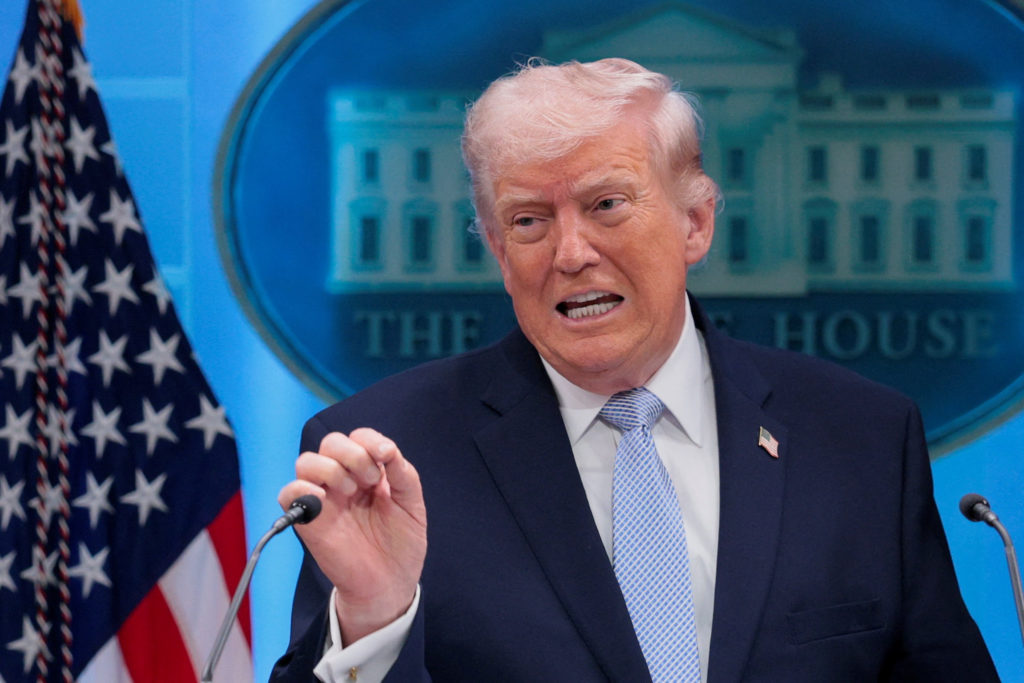
President Trump signed an executive order Monday directing financial regulators to tighten customer identification rules at banks and other institutions — with a specific focus on immigration and work authorization status. For millions of immigrant families who have built their financial lives around a nine-digit IRS number called an ITIN, the order marks a fundamental shift in what it means to have a bank account in America.
Why it matters: The order dramatically expands Trump’s immigration enforcement agenda into the financial sector, potentially affecting millions of immigrants who use U.S. banks, send remittances abroad, or hold loans — regardless of their legal status.
The big picture: The order, titled “Restoring Integrity to America’s Financial System” and signed May 19, directs the Treasury Department and federal banking regulators to update Bank Secrecy Act rules to make immigration status a factor in financial risk assessments.
🔍 What is an ITIN — and who uses one?
An Individual Taxpayer Identification Number is a nine-digit tax processing number issued by the IRS to people who are required to file U.S. taxes but aren’t eligible for a Social Security number. That includes undocumented immigrants, certain visa holders, foreign nationals, and their dependents.
ITINs are widely accepted by banks and other financial institutions as a valid form of identification for opening checking accounts, savings accounts, and obtaining other financial services. Critically, the whole point of an ITIN is to bring people into the formal economy — to pay taxes, open accounts, and participate legally in the financial system.
In 2022, undocumented immigrants paid approximately $96.7 billion in federal, state, and local taxes, averaging about $8,889 per person, according to the Institute on Taxation and Economic Policy. Many of those tax payments flow through ITINs.
The Budget Lab at Yale estimates that in 2023, unauthorized immigrant workers paid $66 billion in federal taxes, with roughly $43 billion in payroll taxes and $22 billion in individual income taxes.
⚠️ How the order targets ITIN holders
The order explicitly calls out ITIN use as a potential red flag. It lists among the “suspicious activity” typologies the use of an ITIN to obtain credit products or open depository accounts where the applicant lacks verified lawful immigration status, noting that while an ITIN facilitates tax compliance, its use in lieu of a Social Security number may be identified as a risk factor requiring enhanced due diligence.
The move could make it more difficult for non-citizens, especially undocumented immigrants, to access financial services, even for legitimate reasons.
In short: the very tool the IRS created to bring undocumented people into the tax system is now being framed by the White House as a financial risk signal.
🏠 Impact on loans and mortgages
ITIN holders already face an uphill climb when it comes to borrowing. A study by the Urban Institute estimated that between 5,000 and 6,000 mortgages were issued to customers with ITINs, and that banks were highly reluctant to lend to ITIN holders. Fannie Mae and Freddie Mac are also generally reluctant to insure mortgages for borrowers with an ITIN, making it even less likely for ITIN holders to obtain a mortgage.
The new order gives lenders fresh regulatory cover to go further. The Consumer Financial Protection Bureau is directed within 60 days to consider clarifying that potential deportation and loss of wages are factors that could adversely affect a non-work authorized borrower’s ability to repay an extension of credit, and that lenders may consider such factors as part of a reasonable and good-faith underwriting determination.
That could effectively close the door on mortgages, auto loans, and credit cards for millions of ITIN holders — even those who have lived in the U.S. for decades, own businesses, and pay taxes every year.
😨 The “unbanking” fear
Immigration advocates have previously warned that any order directing banks to collect citizenship information would likely result in undocumented immigrants moving out of the financial system, increasing the number of “unbanked” individuals.
That’s not a hypothetical concern. Roughly 3 out of every 10 clients seen at one immigration law firm in 2026 had already received unexpected requests from their banks for additional documentation — and that’s before this order fully takes effect.
Families who leave the formal banking system tend to rely on cash, unregulated money transfer services, and informal lending — tools that carry far higher fees, security risks, and vulnerability to exploitation. Ironically, this could drive the very financial behavior the order claims to be cracking down on.
📋 Who else is affected beyond undocumented immigrants
Individuals with pending employment authorization renewals, business owners, and applicants with complex immigration histories may experience more questions from financial institutions. Employers who rely on unauthorized labor or improper payroll practices may also face increased scrutiny.
Importantly, ITIN holders include a wide range of people beyond the undocumented: spouses and dependents of visa holders, foreign students, recipients of certain visas, and others with lawful but non-work-authorized status. A person may have a pending immigration case, an expired document with an automatic extension, an ITIN for tax purposes, or a lawful status that does not include unrestricted employment authorization — and each situation should be reviewed individually.
🔒 What protections currently exist
Banks cannot share your financial information with government agencies without a proper legal process, such as a subpoena or court order. The Right to Financial Privacy Act protects your records. An IRS data-sharing attempt with immigration enforcement was blocked by a federal judge in early 2026. But the order creates new pathways for enhanced scrutiny that could change that calculus.
Since banks have never collected any information about their customers’ citizenship or immigration status, there are no reliable public figures on how much risk these customers actually pose to the financial system — making the order’s framing as a risk-mitigation measure difficult to evaluate empirically.
What’s next: Treasury and federal regulators have 60–180 days to issue guidance and propose rule changes. Legal challenges from immigrant advocacy groups and state attorneys general are widely expected. Meanwhile, community banks and credit unions that have long served immigrant populations say they’re watching closely to understand what “enhanced due diligence” will require in practice.
The bottom line: The order stops short of mandating outright denial of services to ITIN holders — but it hands banks the regulatory justification to treat tax-compliant immigrants as financial risks, potentially unraveling decades of effort to bring immigrant families into the formal economy.
Sources: White House Executive Order (May 19, 2026); AP; NBC News; Time; Yale Budget Lab






Responses